
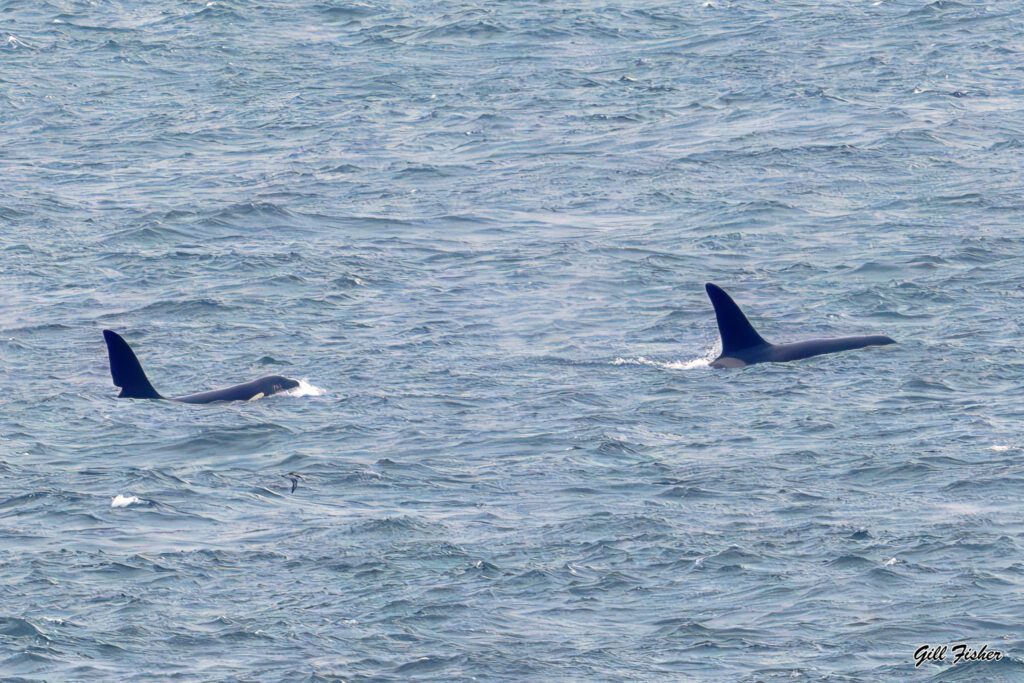
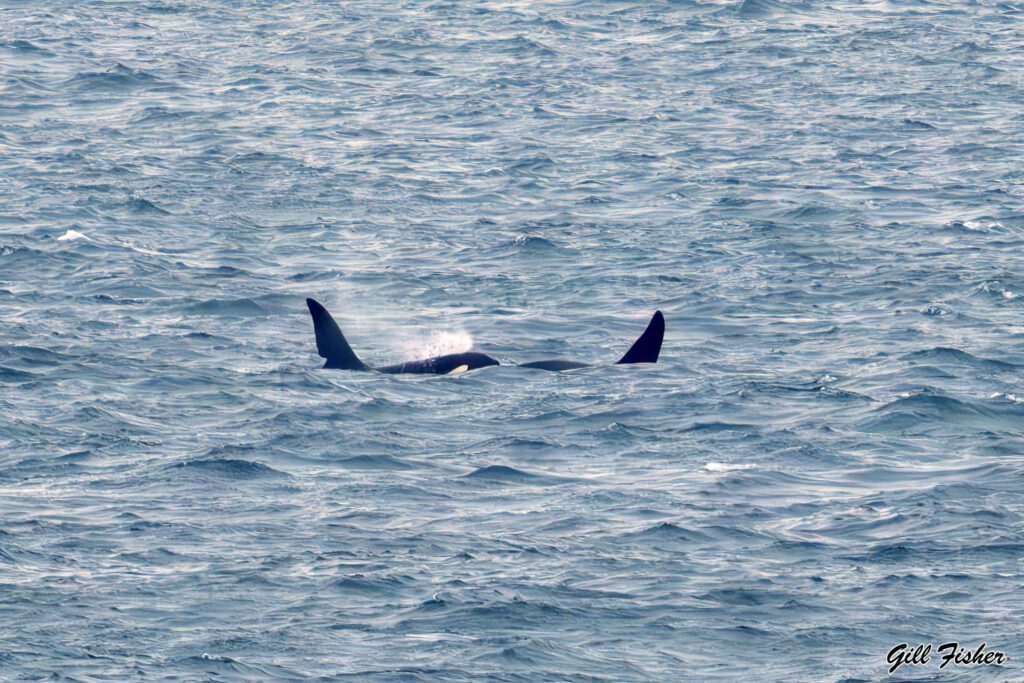
John Coe and Aquarius, two of the last remaining individuals from the critically endangered
West Coast Community of orca found in Scotland, have been spotted off the Lizard in
Cornwall this week.
Seagoers and coastal walkers on the south coast were extremely lucky to be treated with sightings of the pair, who almost always travel together. Orcas with their characteristic black and white markings and substantial fin which can reach 1.8 metres are unmistakable. This exact pair can be identified by the distinctive notch in John Coe’s dorsal fin.
Orca, while ubiquitous around the world, are an extremely rare visitor to our coasts. The
males are larger than females, growing to 9 metres and weighing 6,000kg.
They are a famously matriarchal species that display very close-knit family relationships, unlike most
other dolphin species, both males and females remain with their mothers for life and females
live well beyond reproductive age, suggesting that grandmothers play a vital role in teaching
the young the ways of the world.
Orcas display very complex relationships with one another; they pass on traditions and teach their young particular hunting tips and tricks, they even have regional dialects and have shown preferences for interacting only with orcas with the same accents as them!
The west coast community of Orca now sadly consists of only these two males. John Coe is
thought to be around 60 years old, and his companion Aquarius is around 30. They are a
mammal eating community and subsist on hunting seals and small cetaceans like porpoise.
This has left them susceptible to an unfortunate phenomenon called biomagnification where
any pollutants in the environment accumulate more and more as they travel up the food chain,
meaning that top predators can end up ingesting lethal amounts.
The community has been small since the 1980s, when it is thought that there were thought to be around 20 individuals, this could also explain their reduction in numbers as there was always very little genetic
diversity in this group and they have never been seen interacting with another group.