
Meet Esmée: my first season as a wildlife guide
The job ‘Wildlife Guide’ is just as exciting and enthralling as you might imagine – spending your days surrounded by dolphins, seabirds and seals is definitely a huge perk of the role. However, there’s so much more to the job than people may realise. It’s not always sunshine and calm seas, which only makes those beautiful still mornings and unforgettable wildlife encounters feel even more special.
I have worked as a wildlife guide at Padstow Sealife Safaris for around three months now, and it has already been an incredible experience. No two days are ever the same; every trip brings different wildlife sightings, changing sea conditions, and a fresh group of customers to inspire and share the experience with.
Early mornings and preparing for the day
My days begin with trying to wake myself up by doing some yoga, then making a coffee in my apartment in Newquay. I get my lunch, snacks and kit-bag ready to go, then begin the journey to Padstow. After parking up, I stroll down to our office down at Padstow Harbour and get ready for the day: checking the weather and sea conditions, preparing life jackets and discussing the day ahead with the rest of the team.
Sometimes we’ll get an exciting tip-off from our marine friends around the coast about a dolphin or whale sighting and excitedly ponder whether we might find them! When our first customers arrive, it’s time for check-in and kitting everyone up in warm layers.
Out on the water: searching for wildlife
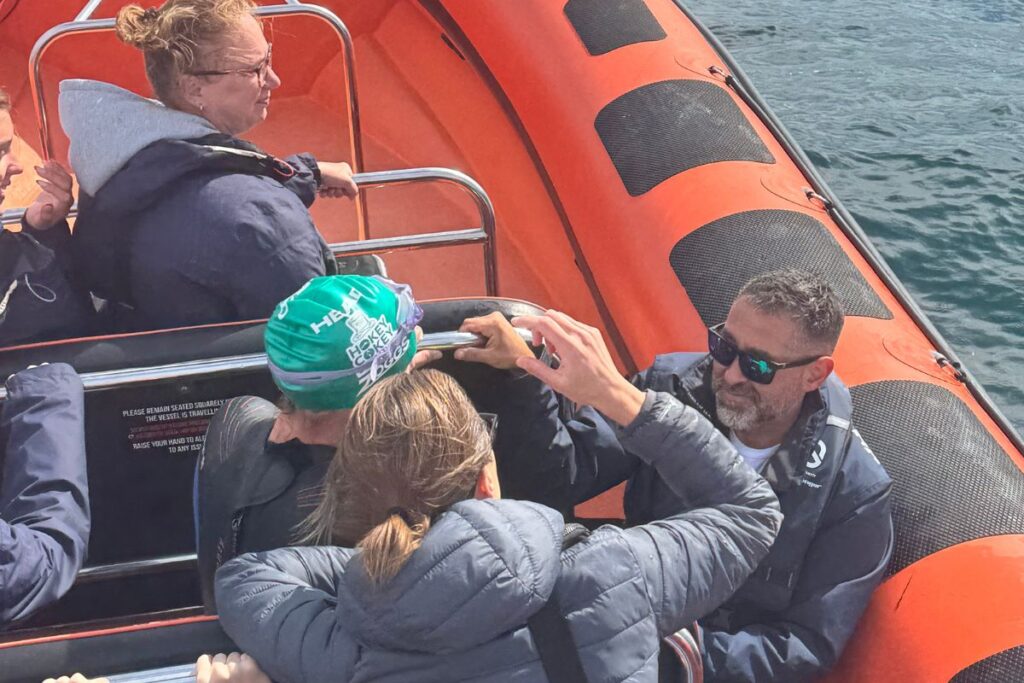
Once everyone is ready to go, the RIB boats are loaded with the excited passengers. As the boat starts to move out of the harbour, I deliver the safety briefing. A quick chat with the skipper confirms which route around our beautiful coastline we will take to maximise wildlife spotting opportunities and work best with the wind and swell direction.
After the practical information is out of the way, the search for wildlife begins and all eyes are on the sea! Before we’ve even left the estuary, we can already be spotting cormorants, oystercatchers and little egrets.
A huge part of being a wildlife guide is observation. As soon as the trip starts, I’m constantly scanning the water and cliffs, looking for movement and clues that an animal may be nearby. It’s amazing how suddenly a seemingly empty part of the ocean can become alive. Having also worked as an RNLI Beach Lifeguard for 6 seasons, observation of the sea is something incredibly familiar to me, and my eyes are well-trained to notice things out on the water.
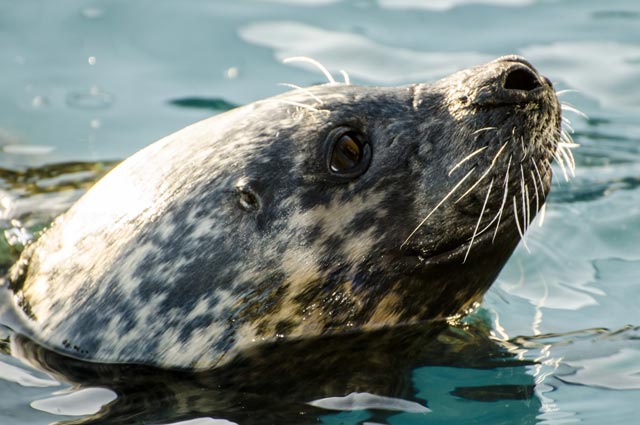
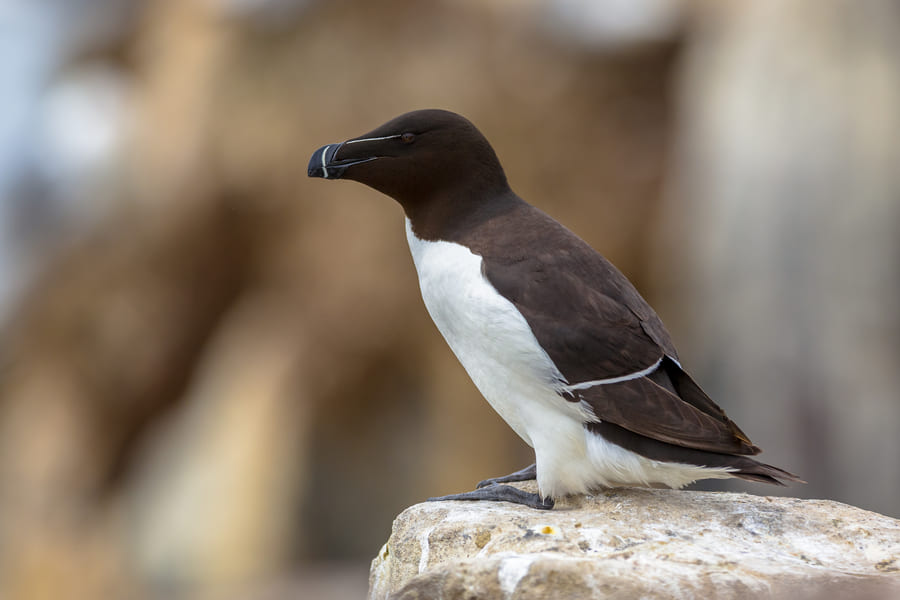
When we arrive at our first stop on the boat trip, hopefully we’ve already seen an animal. If not, I begin introducing the area and the species that we usually find in it. At that point, normally a some wildlife has appeared, such as a grey seal has popping its head up or a razorbill flying by- quite often this happens at the perfect time, almost like they’re paid actors!
The wildlife I’ve been lucky enough to see
Since starting my role here, I have been extremely lucky to see many incredible species. My highlight so far is definitely seeing the Atlantic Puffin – so much smaller and more adorable than I ever thought! As a vulnerable species which doesn’t come to land in many places in the UK, I feel so lucky that I get to visit one of Cornwall’s remaining puffin breeding colony as my job.
I’ve also seen common dolphins, grey seals (my personal favourite animal), guillemots, razorbills, gannets and plenty of other species. Every sighting is special, even if I’ve seen them before, and sometimes we observe intriguing new behaviours. The best part of seeing species in the wild is that the encounters are completely natural and unpredictable.
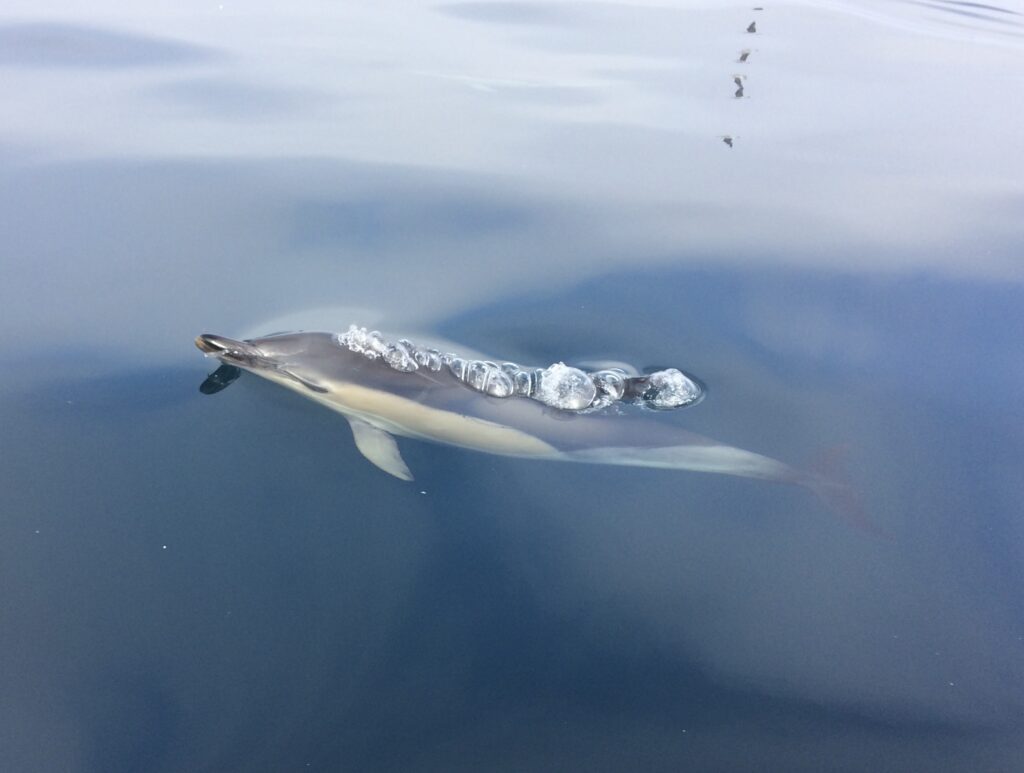
When we stop for wildlife, I point it out to our passengers and then love to share interesting facts about them. I love watching people’s faces light up in surprise when, for example, I share that grey seals can dive down to 300 metres deep and stay underwater for 45 minutes! Having studied Marine Biology at university, it feels really special to share my knowledge with others and build on what I learned during my degree.
Collecting scientific data on every trip
Not only am I chatting about the wildlife, but I am also collecting data on it. Every trip is an opportunity to collect scientific data, and we use this to contribute to crucial research projects such as ORKS (Online Recording Kernow and Scilly- a project by the Cornwall Wildlife Trust) and our very own puffin monitoring project, in collaboration with the Cornish Seal Sanctuary and Padstow Marine Group. When we stop at Gulland Island and see many sleepy seals hauled out on the rocks, I am internally counting the number of females, males and juveniles, which is then sent off to our wildlife guide group chat to be entered into the database.
After the trip: debriefs, data and getting in the surf
After an unforgettable trip at sea and hopefully some amazing wildlife sightings, we begin the journey back into the estuary. After saying goodbye to our lovely passengers, I come back into the office and debrief with the team about what we all saw out there. We hang up and sort all of the kit and lifejackets, ready for the next trip. All data collected is entered into the databases, ready to be passed on to the relevant scientific organisations.
At the end of the day, I make my way back to Newquay. If the waves are good, I head down to my local beach and get in the water for a surf- I find it’s a great way to reset myself and decompress from an adventure-filled day, ready for my next day of work. After that, I make a good dinner- I’m always ravenous after a day on the boat! I check the schedule for the next day, make my lunch ready to go and look over my notes on the wildlife we may see.
Always more to learn
Every single trip teaches me something new- whether that’s learning more about seabird behaviour, improving identification skills or understanding how weather and tides affect where and when animals are found.
Wildlife guiding isn’t just about reciting facts- it’s about sharing enthusiasm with people and helping them connect with the marine environment around them in an engaging and inspiring way.
The most exciting part of working on the ocean for me is the possibility of seeing something completely unexpected. That sense of anticipation is what makes every trip exciting. Even on quieter days, there’s always the feeling that something amazing could appear at any moment.
There are still so many species I can’t wait to encounter for the first time- seeing larger animals such as the elusive Risso’s dolphins would be incredible, however number 1 on my list is a Bluefin Tuna! I have never seen one in person and have heard that they are much larger and quicker than people think, so that would be really cool to see. I am always expanding my knowledge and repertoire of sights, and I cannot wait for this summer on the boats!
Being a wildlife guide has already taught me so much- not only about marine life, but also about the importance of communicating science in an accessible and engaging way, and connecting people with nature.
Every day is a different experience, and getting to share those moments with passengers makes the job incredibly rewarding. Whether it’s watching someone’s face light up in awe of seeing a puffin for the first time or dolphins suddenly appearing beside the boat, those are the moments people remember.