
Spend enough time on the water or the beach around Padstow in summer, and sooner or later you’ll spot one: a pale dome drifting just under the surface, or washed up on the sand at low tide. Cornwall jellyfish stings are a common part of life here, and while most are completely harmless, it helps to know exactly what stung you and what to do about it.
This guide covers every jellyfish species you’re likely to encounter in Cornwall, what each one’s sting actually feels like, and the correct, NHS-backed way to treat one. We’ll also settle that age-old question: does peeing on a jellyfish sting really help?
For general jellyfish facts rather than sting first aid, from how long they live to which species is technically immortal, see our full jellyfish species guide.
Table of Contents
Common Jellyfish Species Along the Cornish Coast
Seven species turn up regularly here, some residents, some occasional visitors carried in on the tide:
- Moon Jellyfish
- Barrel Jellyfish
- Compass Jellyfish
- Blue Jellyfish
- Lion’s Mane Jellyfish
- Mauve Stinger Jellyfish
- Portuguese Man o’ War
These are also among the most common UK jellyfish generally, so if you’ve been stung on a beach anywhere in Britain, there’s a good chance it’s one of the species below.
What Each Cornish Jellyfish Sting Feels Like
1. Moon Jellyfish
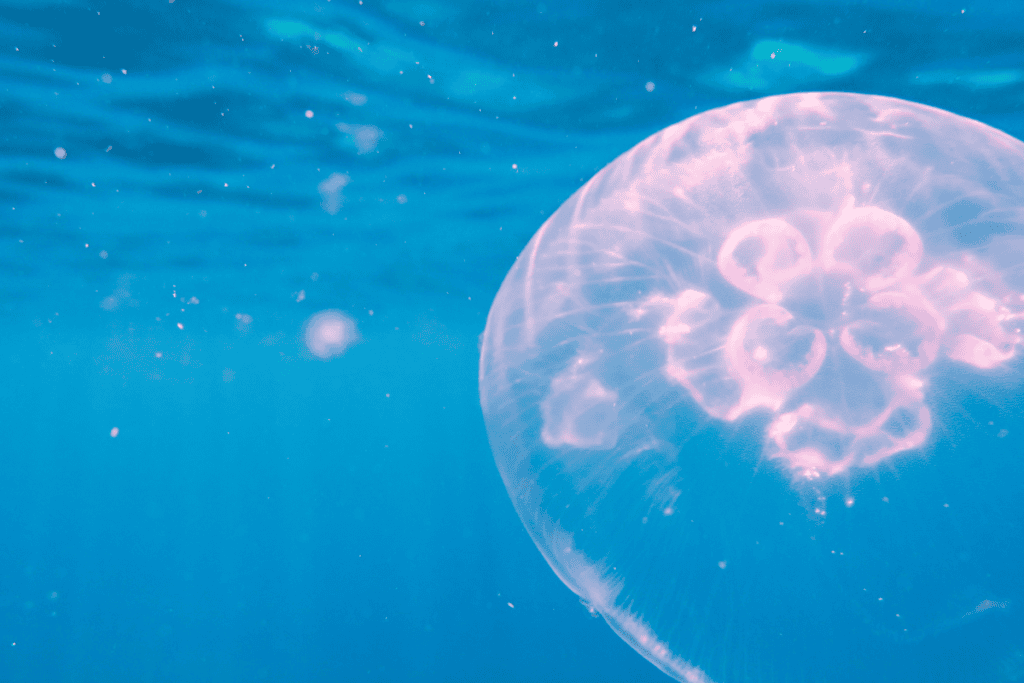
Moon jellyfish are one of the most common types of jellyfish you’re likely to encounter in Cornwall and around the rest of the UK, for that matter. They’re near-transparent, saucer-shaped, and grow to about 25 to 40cm across, with four distinctive pink or purple horseshoe-shaped rings visible right at the centre of the bell. Their tentacles are thin, short, and fringe the whole edge of the dome. Because their diet is almost entirely plankton, their bell often takes on a faint colour from whatever they’ve recently eaten.
Does a moon jellyfish sting? Yes, technically, but a moon jellyfish sting is one of the mildest you can get from any UK species. Most people won’t feel it at all.
What does a moon jellyfish sting feel like? At most, a light tingling or itch. On sensitive or broken skin, it can leave a faint rash or slight reddening, but it’s rarely painful.
How do you treat a moon jellyfish sting? In most cases, no treatment is needed at all. If your skin does react, rinse the area with seawater and apply a cool compress. Full step-by-step treatment for any jellyfish sting is further down this guide.
Where you’ll see them: All around Cornwall’s coast, especially in harbours and calmer water, all year round.
2. Barrel Jellyfish
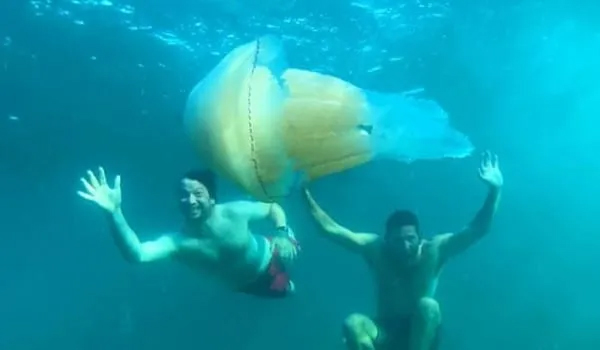
Cornwall’s gentle giant. A pale, milky mushroom-shaped bell that can reach up to 90cm across and weigh as much as 25kg, with eight thick, frilly, cauliflower-like tentacles rather than long trailing ones.
Barrel jellyfish sting: Barely noticeable for most people. Those with particularly sensitive or broken skin might feel a mild tingle or see a slight rash.
Where you’ll see them: Cornwall’s most commonly encountered large jellyfish, often seen in swarms between May and June, and a favourite meal of the leatherback turtles that follow them into our waters.
3. Compass Jellyfish
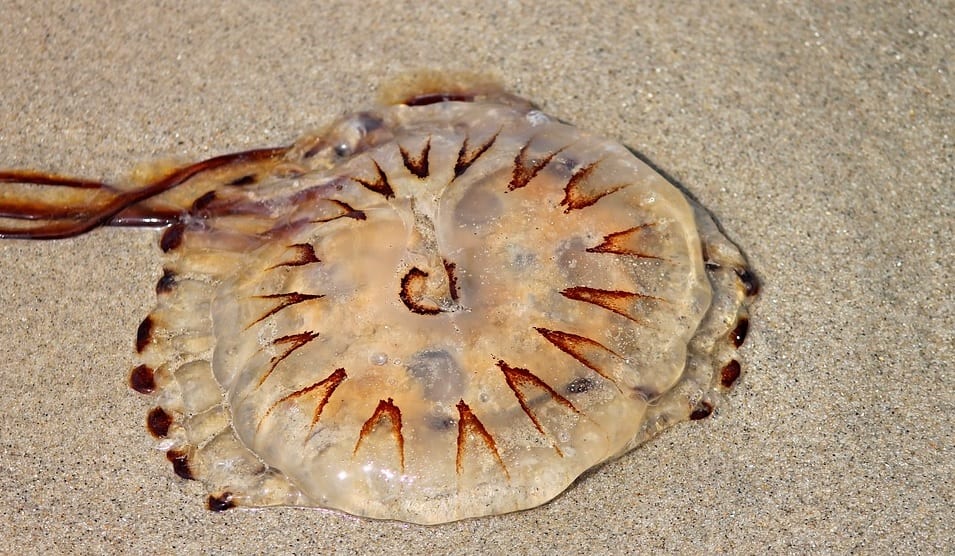
A translucent yellow-white saucer around 30cm across, marked with brown V-shaped lines radiating from the centre, exactly like the points of a compass, with long trailing tentacles and frilled oral arms underneath.
What does a compass jellyfish sting feel like: A nasty, burning sting that leaves noticeable welts. Compass jellyfish can also detach a tentacle on contact, which will keep stinging even after it’s separated from the animal, so take extra care removing every fragment if you’re stung.
Where you’ll see them: A common sight on Cornish beaches through the summer months.
4. Blue Jellyfish
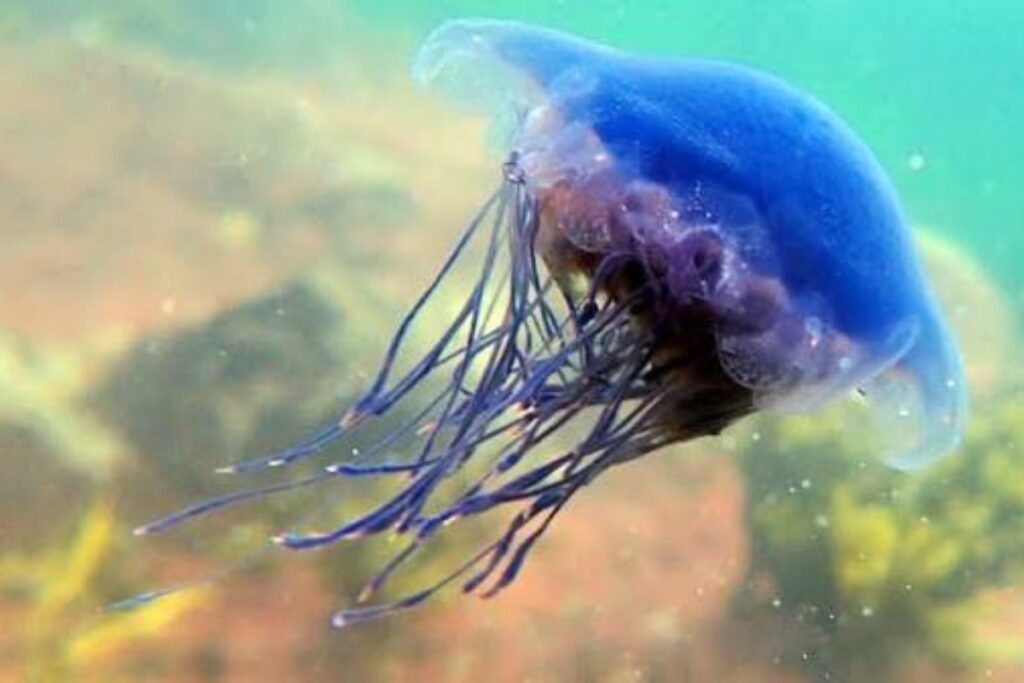
A dome-shaped bell up to 30cm across, ranging from pale yellow when young to a deep blue-purple as it matures, with long, thin trailing tentacles.
Blue jellyfish sting: Mild, similar to brushing against a nettle.
Where you’ll see them: Less common than moon or barrel jellyfish, typically spotted between April and July.
5. Lion’s Mane Jellyfish
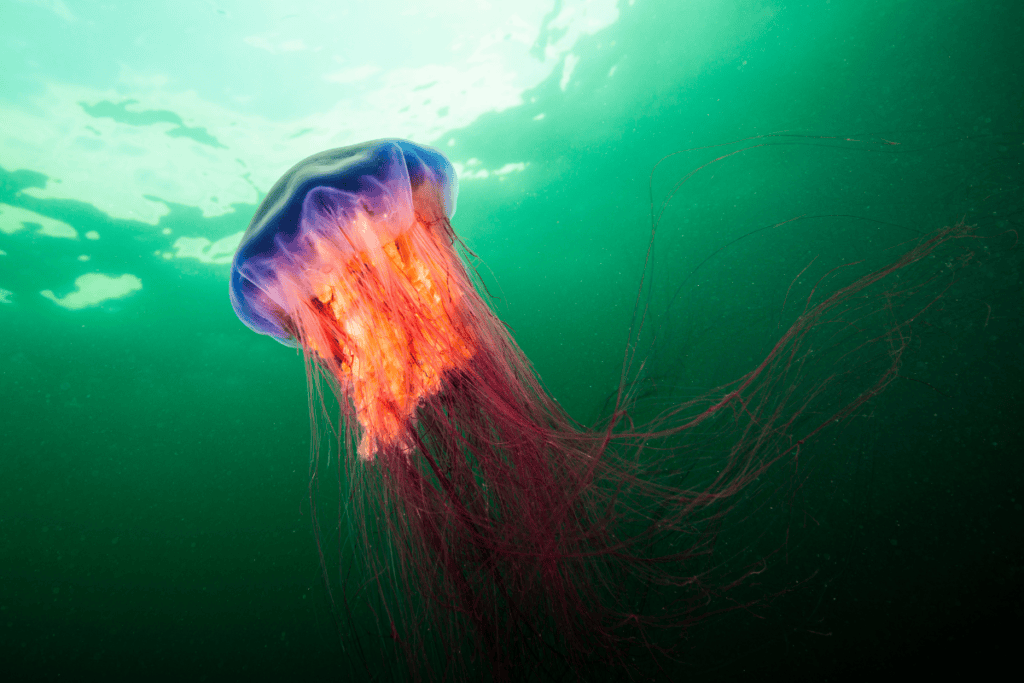
The largest jellyfish species in the world, with a reddish-brown bell and a thick, shaggy “mane” of hundreds of hair-like tentacles trailing beneath it. Specimens in colder northern waters can reach over 2 metres across, though those occasionally seen in Cornwall tend to be much smaller.
The Lion’s Mane jellyfish sting: One of the most painful you can get from a UK jellyfish.
Where you’ll see them: Rare in Cornwall, some of the largest we see on our boat trips. They’re far more at home in the North Sea and around Scotland, though occasional sightings do happen here, so now you know what to look out for.
6. Mauve Stinger Jellyfish
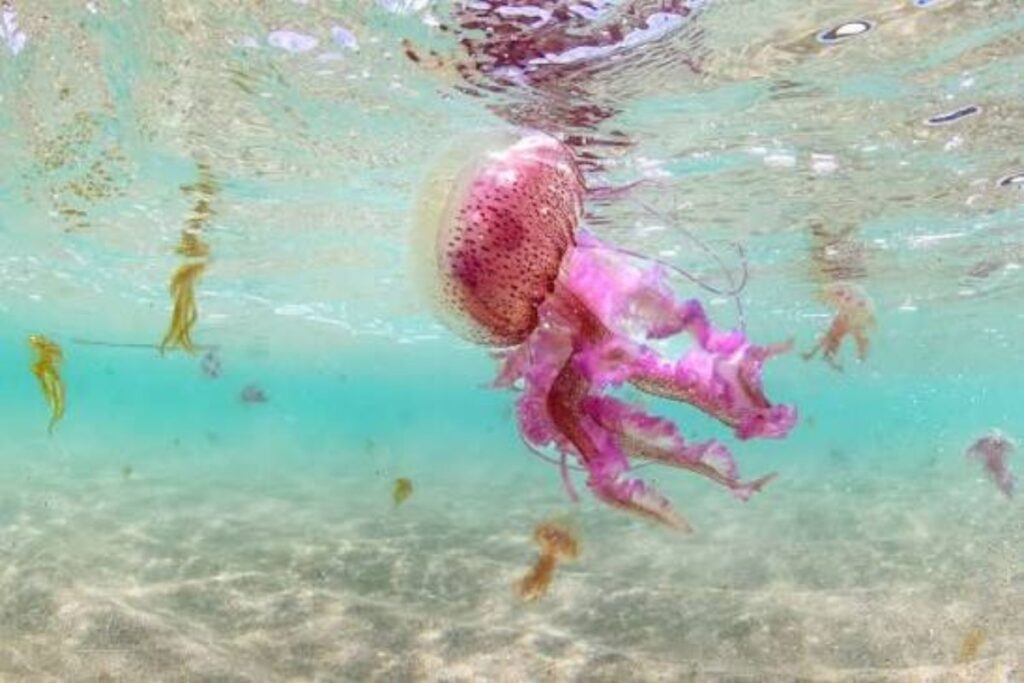
A small, bluey-purple, globe-shaped bell covered in orange-brown wart-like spots, with long, thin tentacles that can trail up to 3 metres. It’s also bioluminescent, and can glow faintly at night.
The mauve jellyfish sting: Painful, with a burning rash that can persist for a while after contact.
Where you’ll see them: Uncommon in Cornwall, but occasionally spotted in the warmer months.
7. Portuguese Man o’ War
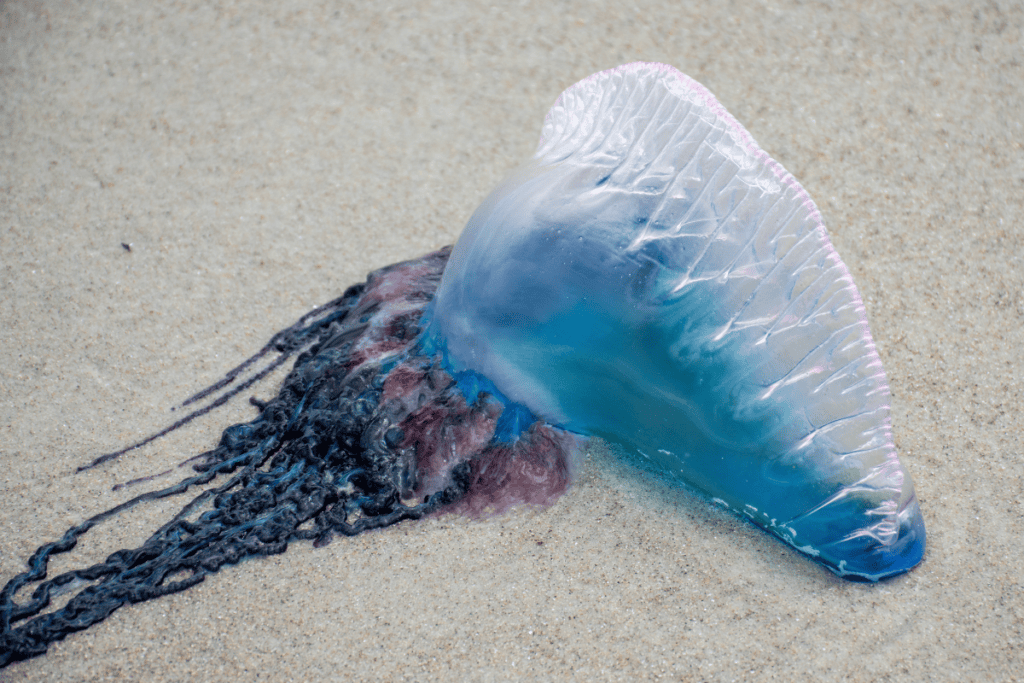
Not actually a true jellyfish, but a siphonophore made up of a colony of specialised organisms. Easy to spot thanks to its purple-blue, balloon-like float that sits above the waterline, with long, ribbon-like tentacles trailing beneath, sometimes for many metres.
The sting: The most severe you’re likely to encounter in UK waters. Expect painful swelling, welts and rashes that can last from hours to weeks. In rare cases, stings have been fatal, and even a dead, washed-up Man o’ War can still sting.
Where you’ll see them: Rare, but not unheard of, particularly after south-westerly Atlantic storms blow them in, usually in autumn. Cornwall’s north coast is one of the more likely spots to see one wash up.
How Do Jellyfish Sting?
A jellyfish’s tentacles are covered in cnidocytes, or “stinging cells”. On contact, each cell fires a needle-like stinger that pierces the skin and injects venom, which shocks, stuns or paralyses whatever triggered it.
Because jellyfish have no brain and rely on a simple nervous system, this whole process is an automatic reflex rather than a deliberate attack. Every jellyfish’s venom contains a protein called porin, which breaks down cells, but the exact mix of toxins and firing mechanism varies by species. That’s why stings range from something you’d barely notice to a genuine medical concern.
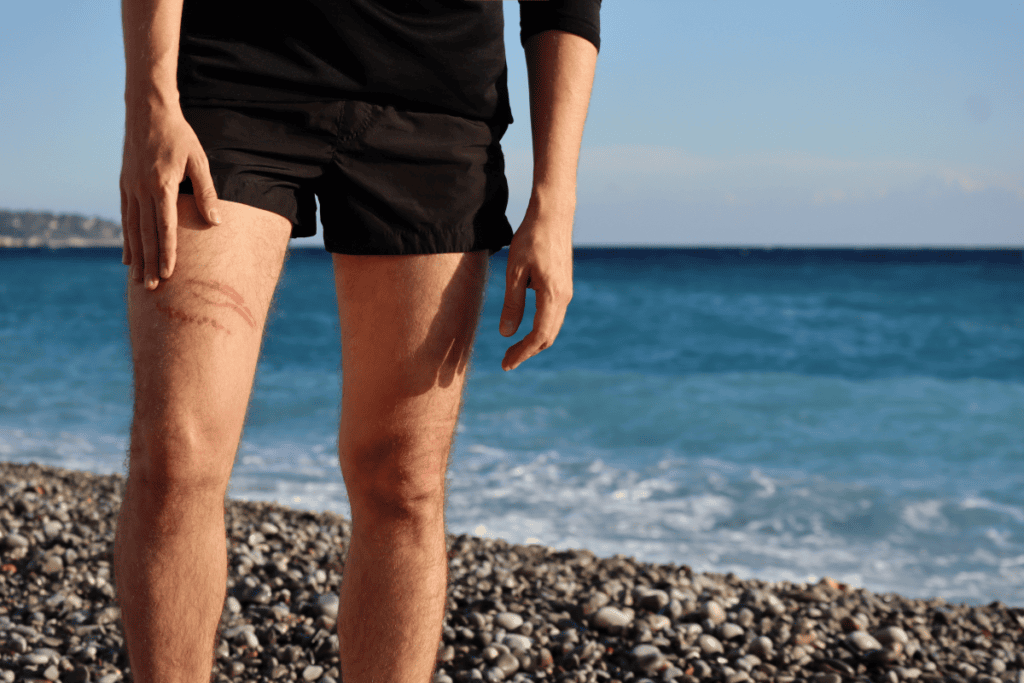
Are Cornwall’s Jellyfish Dangerous?
For the most part, no. The vast majority of jellyfish stings around the Cornish coast are mild: a short, sharp sting followed by some redness or itching that clears up within a few hours. The species worth genuine caution around are the compass jellyfish, lion’s mane, mauve stinger and, especially, the Portuguese man o’ war, all of which can cause real pain and, occasionally, a reaction serious enough to need medical attention.
You won’t find a true Box Jellyfish in Cornwall, the species responsible for the world’s most dangerous stings, but it’s worth knowing about if you’re travelling further afield. Found in warmer waters, particularly the Indo-Pacific and northern Australia, its venom can trigger Irukandji syndrome, a dangerous flood of stress hormones that can be fatal within minutes. If you’re somewhere box jellyfish are present, always follow local warning flags and lifeguard advice.
How Can I Avoid Being Stung by a Jellyfish in Cornwall?
Don’t let the very slim chance of a jellyfish sting put you off enjoying the sea. There’s plenty you can do to reduce your odds of a sting:
- Wear a wetsuit. It puts a physical barrier between your skin and any tentacles.
- Check local news and social media before you swim. Jellyfish blooms and rare sightings are often reported (like this recent jellyfish bloom at Bude sea pool!), so you’ll know which spots to avoid.
- Swim with the current rather than against it. Jellyfish drift with the tide, so swimming against it increases your chances of bumping into one.
- Leave washed-up jellyfish alone. However tempting it is to prod one on the beach, it can still sting you just as fiercely once it’s dead.
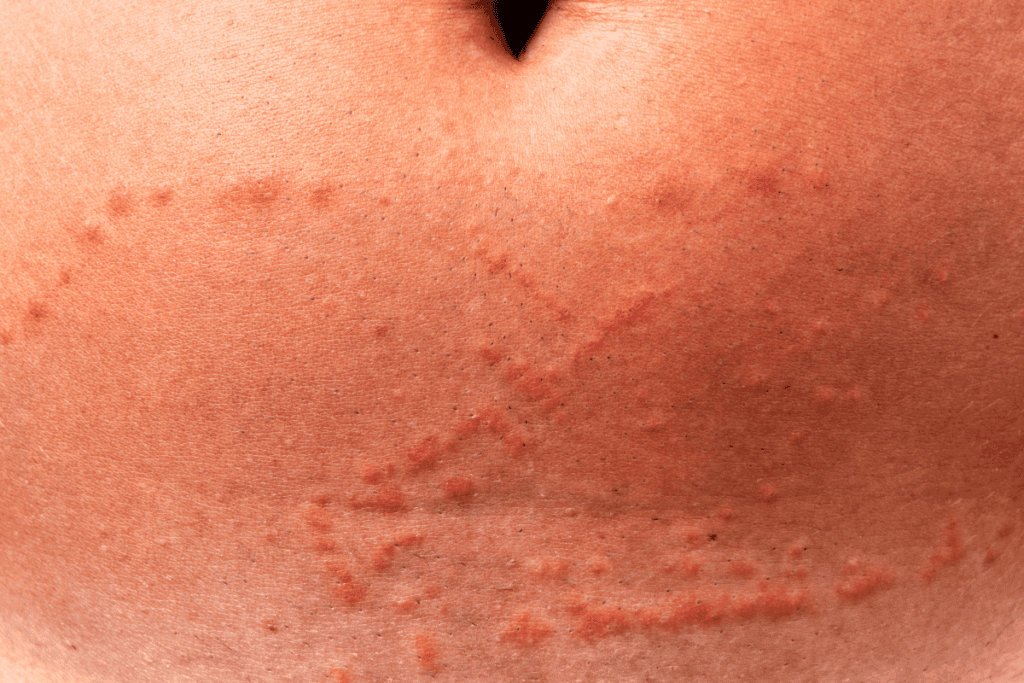
How Do you Treat a Jellyfish Sting?
Jellyfish stingers stay active in your skin after the initial sting, so don’t touch the area with bare hands, and make sure anyone helping you wears gloves too.
- Rinse with seawater. Never use fresh water: it triggers any stingers still on the skin to fire, releasing more venom.
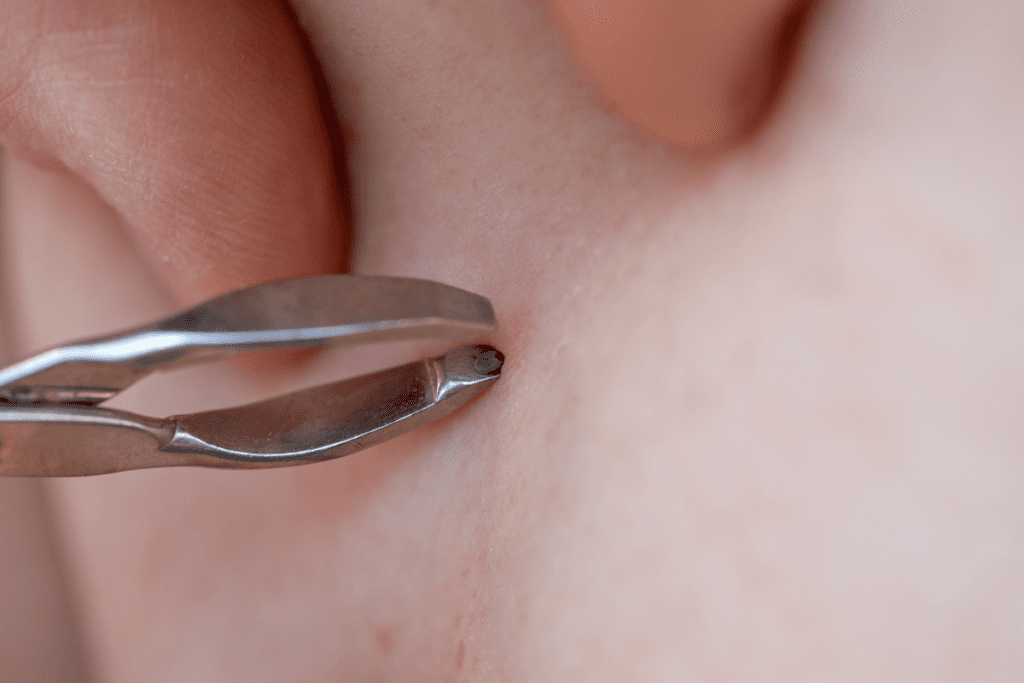
- Remove any remaining tentacles using tweezers, or even the edge of a credit card.
- Soak the area in very warm water, as hot as can be tolerated, for at least 30 minutes. This helps break down the venom (similarly to how you would treat a weever fish sting).
- Take painkillers to manage the initial pain.
- Avoid vinegar and ice. Current NHS jellyfish sting advice is that vinegar isn’t recommended for UK jellyfish stings, and ice can make things worse rather than better.
- Don’t rub the area. It only spreads the venom further.
And crucially: don’t pee on the sting! It’s a popular myth with no scientific basis. Studies have found urine makes no measurable difference, and it’s frankly unhygienic on an open wound. The idea likely comes from urine containing ammonia, which in theory could neutralise venom, but it’s far too diluted with water to have any real effect.
The intense pain of a jellyfish sting typically eases within one to two hours, though the area can stay itchy and marked for a few weeks afterwards. In rarer, more severe cases, a scar can develop, showing as red, brown or purple lines where the tentacle made contact. If this happens, seek medical advice, keep the area clean with antiseptic, moisturise regularly, and keep it out of the sun to stop it darkening further.
When Should I be Concerned About a Jellyfish Sting?
A small, localised reaction isn’t a cause for panic. It might be painful, itchy and unsightly, but following the advice above, plus that of any lifeguard on duty, is usually all you need.
The NHS recommends visiting a minor injuries unit if you have severe pain that isn’t easing, or if you’ve been stung on your face or genitals. Go to A&E or call 999 if you experience any of the following after a jellyfish sting:
- Difficulty breathing
- Chest pain
- Seizures
- Severe swelling or bleeding
- Vomiting
- Light-headedness or loss of consciousness
Symptoms can escalate quickly, so it’s always better to be safe than sorry.
Jellyfish are impressive, prehistoric creatures unlike anything else in our waters, and spotting a bloom of them on one of our 2 Hour Sealife Safari always delights us. Like all marine life, they deserve our respect and a healthy amount of awareness. Most Cornwall jellyfish stings are unpleasant rather than dangerous, and the chances of meeting a truly dangerous species here are incredibly slim. Just remember: don’t pee on the sting.
- NHS: Jellyfish and other sea creature stings
- Marine Conservation Society
- The Wildlife Trusts: Identify UK jellyfish
- Healthline: Jellyfish sting
Cornwall Jellyfish Stings – FAQs
What causes a jellyfish sting?
A jellyfish sting happens when its tentacles release venom through tiny stingers called nematocysts that pierce the skin.
What should I do immediately after a jellyfish sting?
Rinse with seawater, carefully remove tentacles, soak in hot water (40–45°C), and seek medical help if severe symptoms appear.
Can I swim again soon after being stung?
Only once pain and irritation have eased, and the wound is clean. Avoid swimming in areas where jellyfish are still present.
Which species of jellyfish are found in UK waters and can sting?
Common UK species include the lion’s mane, moon jellyfish, barrel jellyfish, mauve stinger, and Portuguese man-of-war.
Can all jellyfish stings be dangerous?
Most UK stings are mild, but some species like the Portuguese man-of-war can cause serious reactions.
How long do jellyfish sting symptoms last?
Pain from jellyfish stings usually lasts a few hours; redness and itchiness can persist for a few days.
Should I use vinegar, hot water, or ice on a jellyfish sting?
Hot water soaks help pain; vinegar may neutralise some stings (not all species); avoid ice, which can worsen the sting for some jellyfish.
What are the most common jellyfish in Cornwall?
Moon, barrel, compass and blue jellyfish are seen most often around Cornwall’s coast. Lion’s mane, mauve stinger and Portuguese man o’ war turn up far less frequently, but do occasionally appear.
Do moon jellyfish sting?
Yes, but only mildly. Most people won’t feel a moon jellyfish sting at all, and at worst it causes a light tingle or slight rash on sensitive skin.
What is the most common UK jellyfish?
The moon jellyfish, recognisable by the four horseshoe-shaped rings visible through its transparent bell, is the jellyfish you’re most likely to encounter anywhere around the UK coast, including Cornwall.
Which Cornwall jellyfish has the worst sting?
The Portuguese man o’ war has the most severe sting seen in Cornish waters, followed by the lion’s mane and compass jellyfish.
What should I do immediately after a jellyfish sting?
Rinse with seawater, carefully remove any tentacles, soak the area in hot water (40 to 45°C), and seek medical help if severe symptoms appear.
Does peeing on a jellyfish sting help?
No. It’s a long-standing myth with no scientific backing, and can even be unhygienic on broken skin.
How long do jellyfish sting symptoms last?
Pain usually lasts a few hours, while redness and itchiness can persist for a few weeks in some cases.
Do jellyfish in Cornwall sting?
Yes, most species found here can sting, but the majority of stings are mild. Barrel and moon jellyfish are barely noticeable; compass, mauve stinger and Portuguese man o’ war sting much more sharply.
What are the massive jellyfish in Cornwall?
Barrel jellyfish are the largest regularly seen here, growing up to 90cm across and weighing as much as 25kg. Lion’s mane jellyfish are the largest species in the world, but only occasionally turn up in Cornish waters.
Are there any poisonous jellyfish in the UK?
Strictly speaking, jellyfish are venomous rather than poisonous (venom is injected, poison is ingested), but Portuguese man o’ war, lion’s mane and compass jellyfish carry the strongest stings in UK waters. None are as dangerous as tropical species like the box jellyfish.
What are the clear jellyfish in Cornwall?
That’s almost always the moon jellyfish, the near-transparent species recognisable by the four horseshoe-shaped rings visible through its bell.