
A Welcome Sign of Summer
These incredible fish are one of the most distinctive species we see offshore, and their arrival is often a welcome sign that warmer months and increased marine activity are underway.
Ocean sunfish can be spotted fairly regularly during the warmer summer months from about June to August, although we have had sightings as late as October. This one is a little early for the season, but with the recent spell of lovely weather and calm conditions, it is perhaps not too surprising to see them appearing offshore already.
How to Recognise an Ocean Sunfish
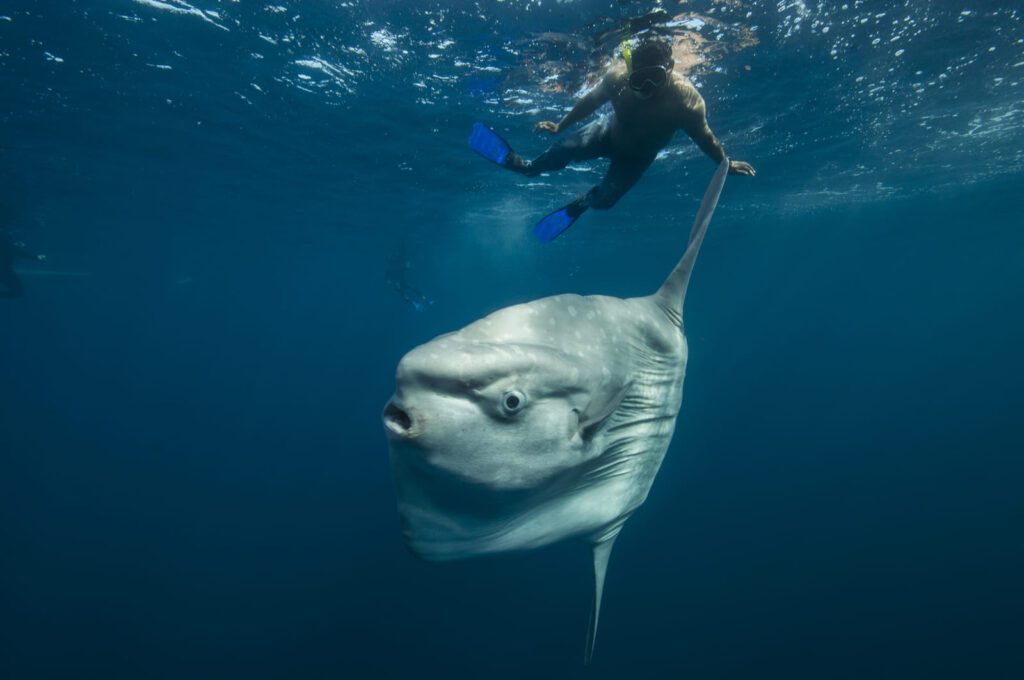
Instantly recognisable by their huge, flattened bodies and unique shape, sunfish often appear to drift effortlessly at the surface, making them a truly remarkable sight for anyone lucky enough to come across one.
Sunfish are born with a normal tail, but as they grow it stops developing and folds into a rounded structure called a clavus. They swim by flapping their long dorsal and anal fins like wings, giving them their distinctive circular shape. They are often seen basking at the surface, which may help them warm up after deep dives or allow seabirds to remove parasites from their skin. Ocean sunfish don’t have scales, instead, they have a thick, rubbery skin covered in mucus that can be up to three inches thick in some areas.
The Heaviest Bony Fish in the World
Despite their gentle appearance, ocean sunfish are the heaviest bony fish in the world, with adults capable of reaching up to 10 feet and weighing well over 2,200kg. The ones we see in Cornish waters are considerably more modest – roughly the size of a dustbin lid, but no less extraordinary for it.
What Do Sunfish Eat?
Sunfish feed on a range of small marine life including krill, plankton, squid and invertebrates, as well as small fish. Jellyfish, however, make up the main part of their diet, and their presence in Cornish waters is often closely linked to seasonal jellyfish blooms. Their mouths are relatively small and cannot fully close inside their throat, fused teeth form a parrot-like beak used to crush soft prey.
From Popcorn Kernel to Ocean Giant
Sunfish start life as tiny larvae no bigger than a popcorn kernel. Over their lifetime, they increase their body weight by a staggering 60 million times, one of the most dramatic growth rates of any vertebrate on earth. A single female is also capable of producing an estimated 300 million eggs in one spawning event, making them among the most prolific of all bony fish.
Why Summer Brings Sunfish to Cornwall
Warmer weather conditions increase jellyfish numbers in coastal waters, which in turn draws sunfish closer to the surface and inshore. It helps explain why we see them most commonly between June and August, and why an early warm spell like this one can occasionally bring them to us ahead of schedule. Each sighting is a reminder of just how varied and unexpected offshore wildlife encounters can be, especially during settled summer conditions.