
Meet the basking shark: the UK’s gentle giant
Basking sharks (Cetorhinus maximus) are the second-largest fish in the world, growing to over 10 metres in length, yet they feed almost entirely on microscopic plankton. At the surface, they swim slowly with their mouths open, filtering vast volumes of water (up to thousands of litres per hour!) through specialised gill rakers that capture their prey and filter the water back out. Despite their size, they are completely harmless to humans, and their presence in UK waters is closely tied to the seasonal movement of plankton.
Basking shark sightings in 2026 so far
In UK waters, basking sharks are typically spotted from spring through to late summer, when plankton blooms develop with the warming waters and concentrate near the surface. Early in the year, sightings are usually limited and scattered due to the gradual build-up of these food sources.
This pattern is already evident in 2026, with the first confirmed UK sighting coming from southwest Scotland. What’s really exciting is that there has been a reported sighting of a basking shark near Lundy Island in early spring. Though this does remain unverified, it represents an exciting regional development for the species. Additional early-season observations from Scotland and Ireland have been reported and numbers remain low for now, as is expected, but we are keeping our eyes and ears to the ground for more sightings around the country!
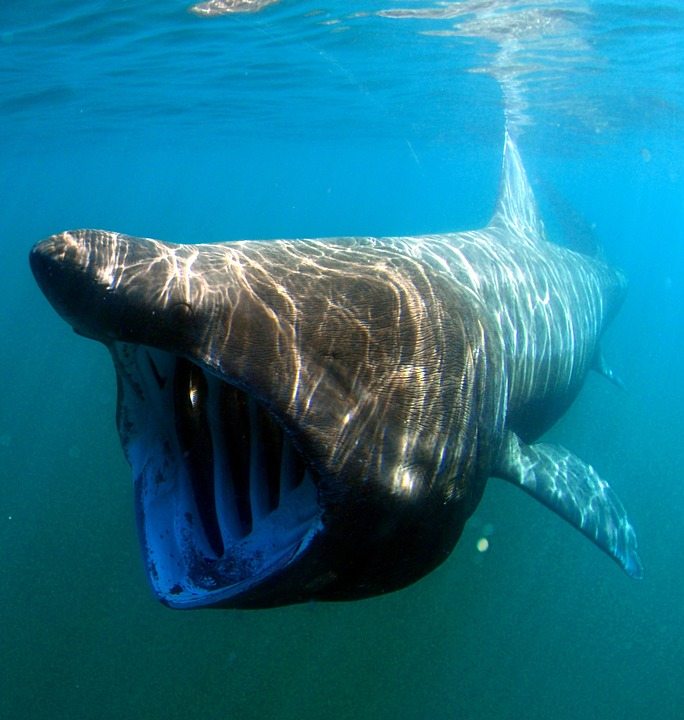
Cornwall’s historic basking shark hotspots
These early sightings are consistent with the way basking sharks typically use UK waters, but they also highlight a broader shift in where sharks are most commonly encountered. Historically, Cornwall, particularly the north coast, was one of the more reliable areas in the UK for basking shark sightings.
Records from the 19th and early 20th centuries describe regular seasonal appearances in areas such as Padstow, Newquay and St Ives, often during spring and early summer. In some cases, multiple individuals were recorded feeding at the surface at the same time, indicating that local conditions were capable of supporting significant concentrations of plankton and, in turn, sharks.
Unfortunately, this is a sight that is no longer seen. While we do still get some sightings of basking sharks in Cornwall, they are more sporadic and less predictable than they were, with only a handful of individuals now seen each season, usually further south or far offshore, our 3 Hour Explorers Safari goes further offshore. In fact, it has been almost 10 years since a basking shark was spotted on one of our trips, highlighting a notable shift in their regional distribution.
Why are basking sharks no longer common in Cornwall?
So why is this happening? It is thought that this shift is the result of both historical and environmental factors acting together. Populations were significantly reduced by targeted fisheries in the 19th and 20th centuries, particularly for squalene from their large and fatty livers, which are so big they make up a third of their body mass! Their slow growth and low reproductive rate mean recovery from this exploitation has unfortunately been gradual.
On top of this, climate-driven changes in UK waters have altered the distribution of plankton, with warming seas pushing key prey species further north and, in some cases, offshore. As a result, basking sharks are now more consistently recorded in regions where plankton remains reliably concentrated, particularly along the west coast of Scotland and around Ireland, while sightings around Cornwall have become more sporadic and dependent on short-lived local conditions.
What this means for Cornwall’s seas
The good news is Basking sharks haven’t disappeared, but their centre of activity has shifted in response to long-term pressures and changing ocean conditions. As plankton continues to move and marine ecosystems adjust, sightings in places like Cornwall are likely to remain inconsistent and harder to predict, while northern and offshore areas become increasingly important for the species. Tracking these changes matters, because they are not just about one species.
They are a visible sign that the balance of our seas is shifting, and that the wildlife we value today may not be found in the same places tomorrow. With continued monitoring, protection, and awareness, there is still an opportunity to better understand and safeguard these remarkable animals in a changing ocean.
Spotting basking sharks on a Padstow Sealife Safari
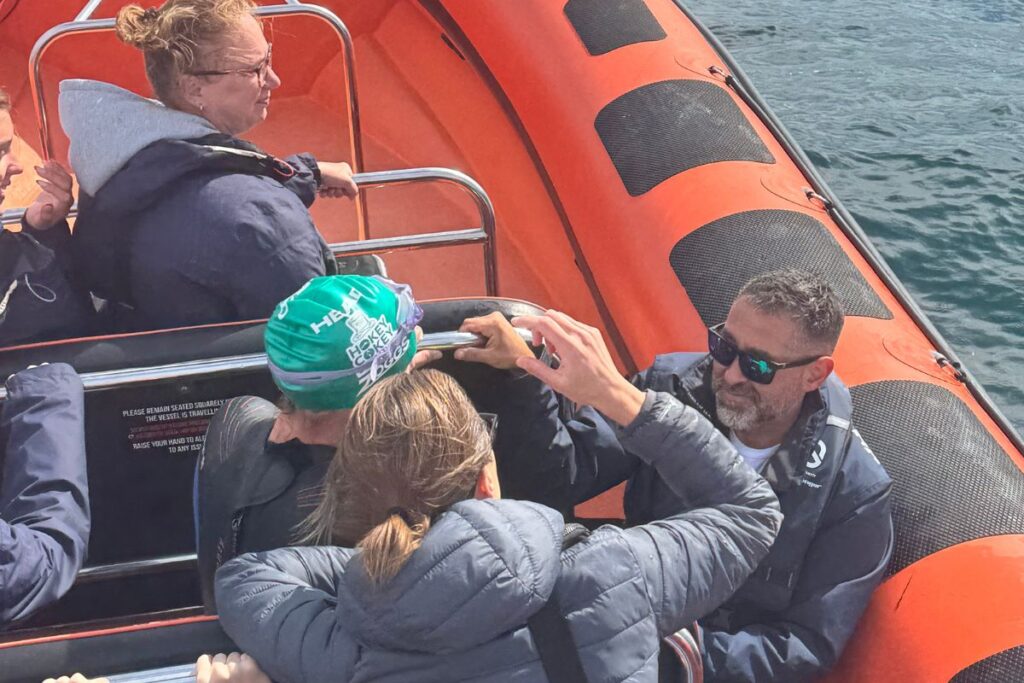
While basking shark sightings around Cornwall have become less predictable and rarer, our Sealife Safari trips still offer one of the best chances to encounter them when they do appear. Our crew know the local waters intimately, keep a close eye on seasonal conditions, and stay in touch with the wider sightings network across the region. Our sharks in Cornwall guide.
Even on trips when basking sharks aren’t around, you’ll get the chance to see seals, dolphins, seabirds and plenty of other marine life on our 2 Hour Sealife Safari that calls this coastline home. Every trip out is also an opportunity to contribute to citizen science, helping build a clearer picture of how Cornwall’s wildlife is responding to a changing ocean.