
Spider crabs Cornwall are one of the most fascinating marine species you can witness along the Cornish coast. Each year, these impressive crustaceans appear in large numbers, offering wildlife enthusiasts, photographers, and families a unique chance to see them in their natural habitat. From their enormous size to their extraordinary moulting behaviour, spotting spider crabs in Cornwall is an unforgettable experience.
Why Are There So Many Spider Crabs in Cornwall Right Now?
If it feels like spider crabs are suddenly everywhere, you’re not imagining it, but it’s not a new phenomenon either. Cornwall Wildlife Trust recorded just one confirmed spider crab aggregation back in 2021. Since then, sightings have grown every summer, with divers and snorkellers now reporting mass gatherings almost every year in Newquay, St Ives, Falmouth, St Austell Bay and the Lizard Peninsula.
The reason is their annual moult. Each summer, adult spider crabs move into shallow coastal water and shed their old shells so they can grow. A freshly moulted crab is soft-shelled and defenceless, so they gather in large numbers, sometimes carpeting the seabed several crabs deep, for safety in numbers while their new shells harden.
Marine biologists believe the growing scale of these gatherings is linked to warming sea temperatures. As Cornish waters get warmer, spider crabs are thriving and appearing in bigger numbers, closer to shore, and later into the year. This summer’s sightings, including a diver’s discovery of hundreds of crabs in the shallows near St Ives in July 2026, fit the same pattern that’s been building for the last few years.
Where to See Spider Crabs in Cornwall This Summer
Spider crab gatherings typically happen in shallow water, often just a few metres deep, from around July through September.
A handful of spots come up again and again:
- Newquay: Newquay harbour is one of the most reliable spots locally, reachable at low tide, with sightings also reported further out toward Fistral and Newquay Bay.
- St Ives: The waters around St Ives have produced some of the most striking recent sightings, including this summer’s, with crabs found in just a few metres of water not far from the beach.
- Falmouth: One of Cornwall Wildlife Trust’s most memorable gatherings was filmed in knee-deep water just metres from a Falmouth beach.
- St Austell Bay and the Lizard Peninsula: Both are established hotspots and worth checking if you’re exploring further south.
A few tips if you want to see them for yourself:
- Go on a calm day with little wind.
- Aim for low tide, when the crabs are closest to shore and easiest to spot.
- Snorkelling gives you the best view. You often don’t even need to dive down; on a clear day you can see them from the surface.
- If you find piles of empty, spiny shells on the sand, don’t worry, that’s almost certainly moulted shells, not dead crabs. It’s easy to mistake one for the other, but a mass die-off looks very different (and is very rare).
Is It Really an “Invasion”? Debunking the Myths
Some press coverage over the years has leaned on words like “invasion,” “swarm,” or worse, and one tabloid piece in 2022 even called them a “plague of poisonous crabs.” None of that is accurate!
Are spider crabs dangerous?
No. Spider crabs are not aggressive toward humans and are not venomous or poisonous. They may raise a claw if you get too close while they’re moulting, but they’re slow-moving and far more interested in staying safe than in bothering you.
Are they an invasive species?
No. Spider crabs (Maja brachydactyla) are entirely native to Cornish waters. What’s changed isn’t the species, it’s the size and visibility of their annual gathering, which is a sign of a healthy, thriving population rather than anything to be concerned about.
Am I looking at dead crabs on the beach?
Almost certainly not. Spider crabs shed their old shells whole as they grow, and those empty shells often wash up in numbers that look alarming at first glance. It’s one of the most common points of confusion around this time of year, and one of the easiest to put to rest.
What Are Spider Crabs?
Spider crabs (Maja brachydactyla) are marine animals known by many names, including the European spider crab, Cornish king crab, and the common or spiny spider crab. This species is the largest spider crab found in the British Isles and is a migratory animal. Spider crabs are invertebrate crustaceans that belong to the phylum Arthropoda and are part of a larger crustacean group that includes animals such as crabs, lobsters, shrimps, crayfish, barnacles, and even woodlice, all of which share similar body structures and characteristics. Spider crabs live up to their name with their long arachnid-looking legs and distinctive spiny shells, often found washed up on beaches.
Physical Characteristics, Defining Features and Identification
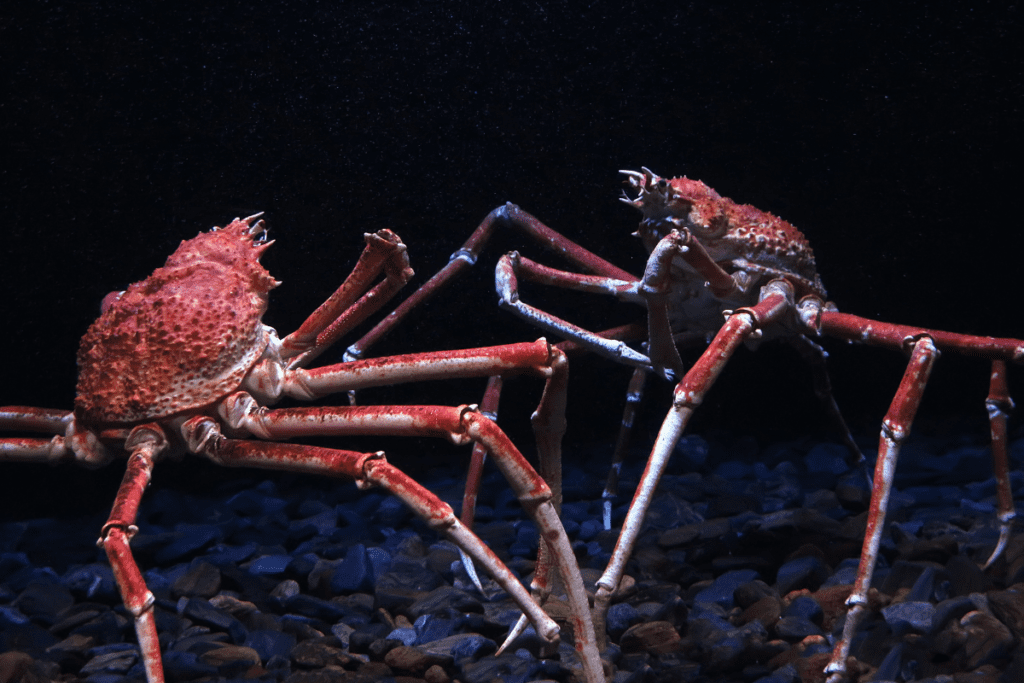
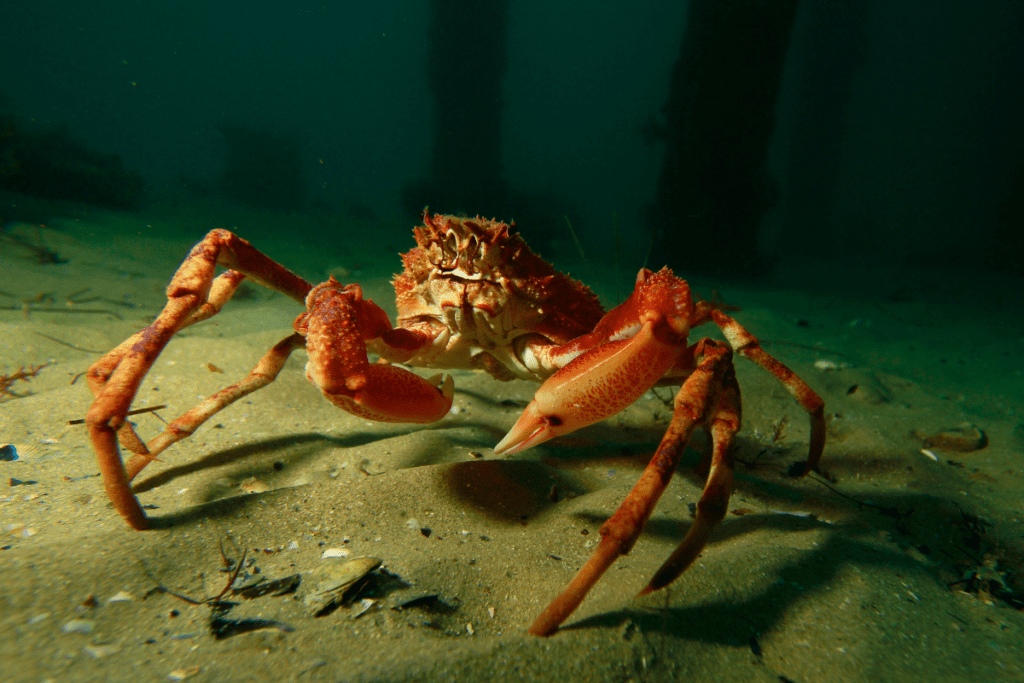
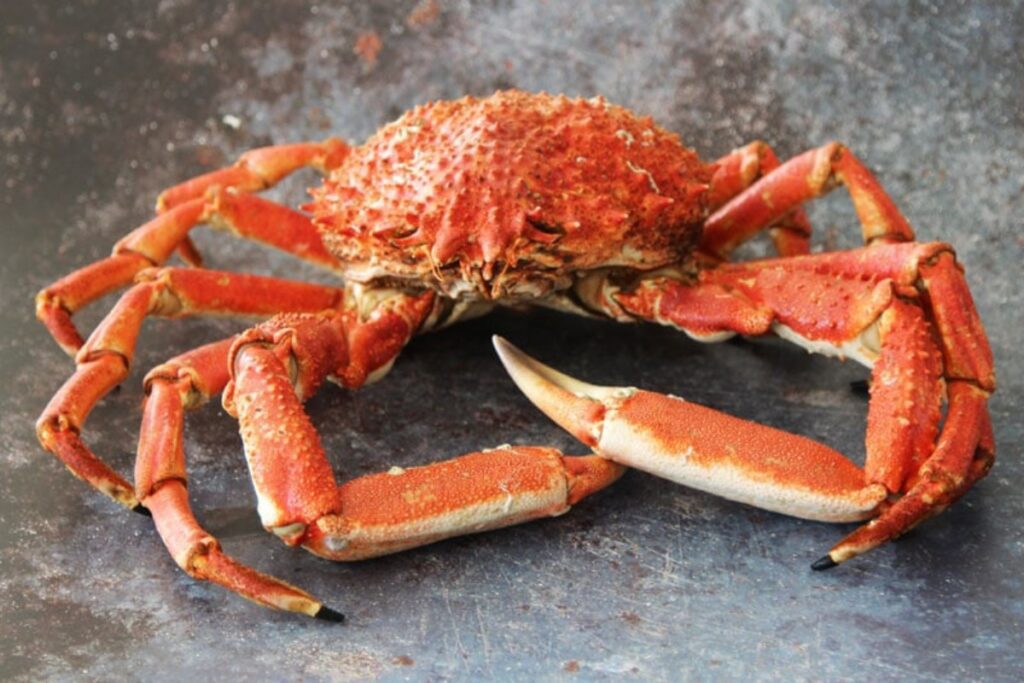
Spider crabs are large marine crustaceans that can grow up to 20–25 cm in body length, with a leg span reaching around 80 cm. They are typically orange to brownish-red in colour and are easily recognised by their long, spindly, spider-like legs and oval, raised shell, known as the carapace.
The carapace is covered in many short, sharp spines for protection and is often coated in algae, giving the crab a green, hairy appearance that helps it blend into its surroundings. At the front of the shell, between the eyes, is a short, strong, forked rostrum with two diverging points that may spread outward or lie almost parallel.
Male spider crabs are usually larger than females and have noticeably bigger claws. Their claws are equal in size and, together with the strong walking legs, feature small spines along each segment.
Spider Crab Habitat & Where They Live
Deep-Sea Environments
Spider crabs are mainly found along the south and west coasts of England, Wales, and Ireland, with their range thought to extend further north toward Scotland. Spider crabs in Cornwall are especially common around the entire coastline, particularly along the north and west coasts of Cornwall.
These crabs inhabit both rocky and sandy marine environments, living from the low-water mark down to depths of around 50–80 metres, often favouring areas rich in seaweed or kelp that provide food and natural camouflage. As juveniles, spider crabs typically remain in shallow waters, but once they moult and reach maturity, adults begin seasonal migrations.
In autumn, they move from shallow coastal areas into deeper waters, sometimes travelling more than 100 miles, and may reach depths of 120–150 metres during the winter months, primarily for mating.
Although they are well known for forming large gatherings in shallow water, this lifecycle migration to deeper habitats is a key part of their annual behaviour.
Spider Crabs in Cornish Waters
Spider crabs are a non-threatened and relatively common species, with the British Isles representing the northern edge of their natural distribution.
Spider crabs in Cornwall are widespread along the entire coastline, with especially strong populations on the north and west coasts, and are frequently recorded around locations such as Falmouth, St Ives, Newquay, and St Austell Bay.
Spider crabs can be found throughout the year, but they undergo large seasonal migrations, moving into shallow coastal waters during the summer and returning to deeper offshore areas in winter. In Cornwall, spider crabs are most commonly observed between July and September, when these migrations bring them closer to shore.
Catching Spider Crabs in Cornwall
Spider crabs in Cornwall are best caught around rocky reefs, kelp beds, harbour walls, and sandy seabeds where there’s structure and slightly deeper water close to shore. The most effective method is using baited crab pots set on the seabed and left for a few hours, but they can also be caught from piers or rocks using crab lines with oily fish bait like mackerel.
They’re most commonly targeted from spring through early autumn, when they move closer inshore, and calm conditions with a steady tide tend to give the best results. If you’re fishing recreationally, rules set by Cornwall Inshore Fisheries and Conservation Authority limit you to five shellfish per day (from the combined group of lobster, crawfish, edible crab, and spider crab), and spider crabs must measure at least 130mm across the carapace before you can keep them – so always check the latest local regulations before heading out.
Spider Crab Behaviour & Diet
Spider crabs are slow-moving, bottom-dwelling crustaceans that spend most of their time crawling across rocky or coarse sandy seabeds, relying on camouflage and limited movement to avoid predators. They’re opportunistic feeders rather than active hunters: like many majid crabs, they’re omnivorous scavengers, using their claws to pick, tear, or crush molluscs, small crustaceans, worms, echinoderms, algae, and carrion on the seabed. This scavenging role makes them important recyclers of organic matter in coastal ecosystems.
Their life cycle ties closely to the seasons. After hatching, larvae spend two to three weeks drifting in open water before settling on the seabed as juveniles, growing in shallow, sheltered habitats for their first couple of years. Like other majid crabs, spider crabs undergo a single terminal moult at maturity (typically around 1–2 years old), after which they stop growing significantly and focus their energy on reproduction.
From this point on, adults follow the seasonal pattern that drives Cornwall’s summer spectacle: moving into shallow coastal water to mate and moult in large groups during summer, then retreating to deeper offshore water over winter. This full cycle, from planktonic larvae to benthic juvenile, growth to maturity, seasonal migration, and reproduction, typically spans several years and reflects their adaptation to UK coastal conditions.
Want to experience Cornish wildlife?
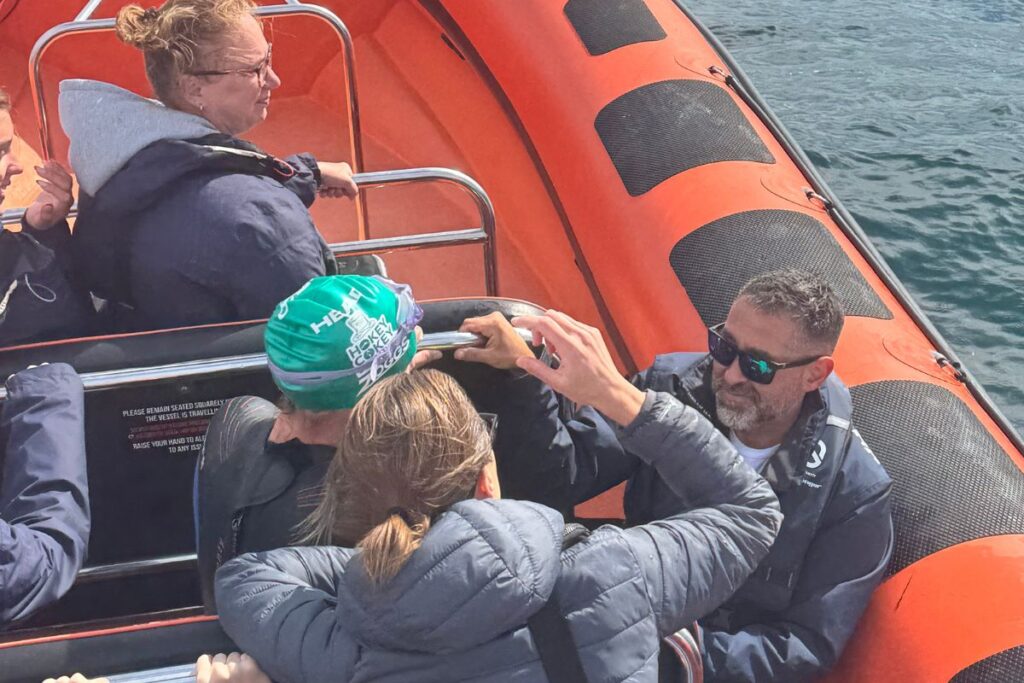
Spider crab gatherings happen in shallow water close to shore, so they’re best spotted by snorkellers and waders rather than from a boat. But a Padstow Sealife Safaris trip is a brilliant way to explore the same stretch of coastline while they’re around, and you’ll have a great chance of spotting Cornwall’s other headline wildlife along the way, from seals and dolphins to seabirds.
Want to experience Cornish wildlife?
Our boat trips provide the opportunity to witness Cornish wildlife in their natural habitat – a truly unforgettable experience!
8 Fascinating Facts About Spider Crabs
- Spider Crabs in Cornwall have a typical lifespan of 5-8 years; however, some species of spider crab, such as the giant or Japanese spider crab, have been known to live to 100 years old.
- During the summer, thousands of spider crabs swarm Cornish waters
- Covered in green algae as ‘hairy camouflage.’
- After molting, spider crab bodies are soft, making them vulnerable, hiding until their new shells harden.
- Not picky-eaters, spider crabs will eat even jellyfish
- Because they have poor eyesight and move slowly, they rely on taste and sensing organs located on their legs to identify food
- Once ignored by fishermen as a nuisance, they are now a significant, sustainable, and economically important catch for the UK and French seafood markets
- Spider crabs have a very low vulnerability to fishing – 12%” meaning this species is considered to have a relatively low risk of population decline due to fishing pressure
Types of Spider Crabs
Spiny Spider Crab (Maja brachydactyla)
Often called the common spider crab, this is the largest species, with a carapace up to 20cm in length. They are common in the South West and frequently found inshore during summer to moult and mate.
Great Spider Crab (Hyas araneus)
Also known as the sea toad, this species is smaller with a pear-shaped, tubercle-covered shell. It is found around all UK coasts, particularly in cooler northern waters.
Long-legged Spider Crab (Macropodia rostrata)
Small, delicate, and highly camouflaged creatures found in rockpools and shallow waters.
Slender Spider Crab (Macropodia tenuirostris)
A specific, smaller, and very long-legged species within the Macropodia genus.
Giant Spider Crabs
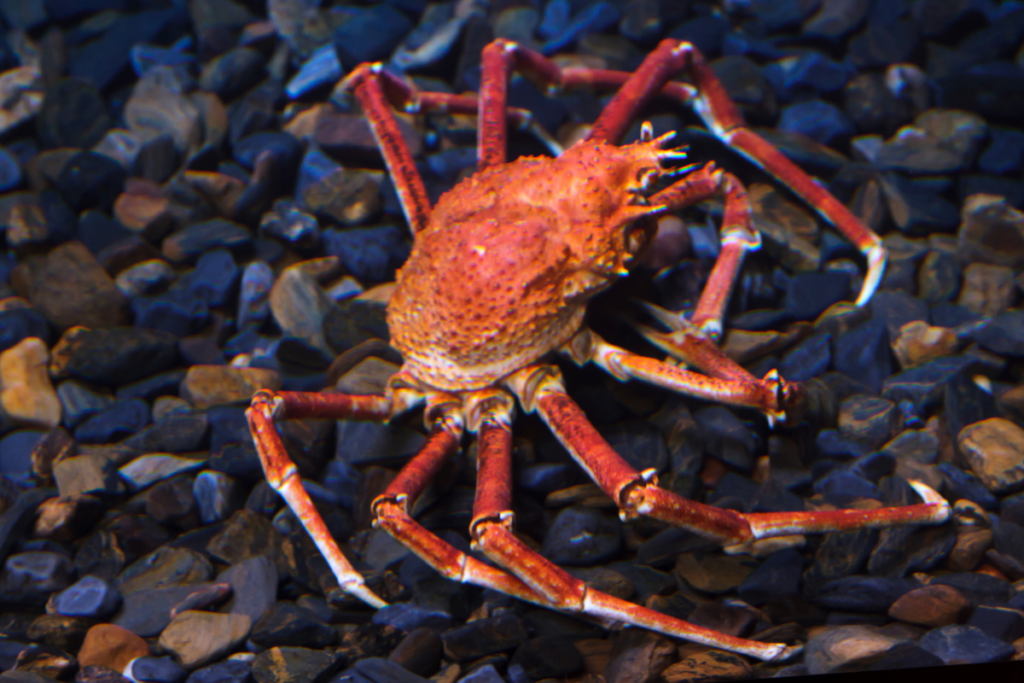
The Giant or Japanese spider crabs are the largest arthropods in the world, famous for their enormous leg span that can reach up to 12 feet (3.7 meters) from claw to claw. Native to the waters around Japan, these deep-sea creatures live at depths of 150 to 1,000 feet, where they slowly crawl along the ocean floor.
Despite their intimidating size and long, spindly legs, they are generally gentle scavengers, feeding on dead animals, shellfish, and plant material. Their tough, spiny shells help protect them from predators, and they can live for decades in the cold, dark depths of the Pacific Ocean.
Other Notable Crabb Species Found in UK Waters
- Edible crab (Cancer pagurus) – Also called the brown crab, this is one of the largest and most commercially important crabs in the UK. It has a broad, reddish-brown shell and powerful black-tipped claws.
- European green crab (Carcinus maenas) – A small but highly adaptable shore crab, usually green or brown. It’s common in rock pools and estuaries and is known globally as an invasive species outside its native range.
- Velvet swimming crab (Necora puber) – Recognizable by its bright red eyes and blue-tinted legs, this aggressive and fast-moving crab is often found under rocks along rocky coasts.
- Hermit crab (Pagurus bernhardus) – While not a “true crab,” this species is very common in UK waters and is known for living inside discarded snail shells for protection.
Why Spider Crabs Matter to Cornwall’s Marine Life
Spider crabs play a genuinely important role in Cornwall’s coastal ecosystem, acting as both predators and scavengers on the seabed. By feeding on molluscs, worms, small crustaceans, algae, and dead animals, they’re key recyclers of organic material, breaking down waste and returning nutrients to the ecosystem in a way that supports overall seabed health.
They also help regulate populations of smaller benthic invertebrates, preventing any one species from becoming overly dominant, while at the same time serving as an important food source for larger fish and predators, making them a key link in the coastal food web. Their seasonal migrations between deep offshore water and shallow summer habitats help transfer energy and nutrients between different parts of the marine ecosystem, and their presence also supports local coastal fisheries, making healthy spider crab populations good news for both marine life and Cornwall’s livelihoods.
Conclusion
Understanding spider crabs in Cornwall is an opportunity to connect with the region’s unique coastal ecosystem and understand the vital role these crabs play in maintaining biodiversity. Whether you’re a wildlife enthusiast, a photographer, or a family looking for a memorable outdoor experience, witnessing spider crabs in their natural habitat is an unforgettable adventure. With Padstow Sealife Safaris, you can enjoy this incredible spectacle safely and responsibly, while supporting local conservation efforts that keep Cornwall’s marine life thriving.
Frequently Asked Questions
Are spider crabs dangerous?
No. Spider crabs are not aggressive toward humans. They may raise their claws if disturbed, but they are generally slow-moving and defensive rather than dangerous.
Why do spider crabs gather in huge groups?
During late spring and summer, they migrate into shallow waters to moult and mate. They often form large aggregations for protection during moulting, when their new shells are soft, and they are vulnerable to predators.
Where are spider crabs found in the UK?
They are mainly found along the south and west coasts of England, parts of Wales, and around Cornwall. The British Isles mark the northern edge of their distribution. They are mostly absent from the North Sea and northern Scotland.
When is the best time to see spider crabs in Cornwall?
Between July and September, they migrate into shallower coastal waters.
How long do spider crabs live?
They typically live for several years. They reach maturity in about 1–2 years and undergo a terminal moult, after which they stop growing.
Can you eat spider crabs?
Yes. They are commercially fished in the UK and are considered good to eat, although they are less commonly sold than brown crab.
Why do spider crabs look “hairy”?
Their shells often collect algae, seaweed, and small organisms. Some species of spider crab even deliberately decorate themselves for camouflage.
What eats spider crabs?
Large fish, octopus, and sometimes humans. They are an important part of coastal food webs.
Are spider crabs endangered?
No. They are considered a common, non-threatened species in UK waters and have very low vulnerability to fishing compared to many marine species.
Why are there so many spider crabs in Cornwall right now?
Spider crab gatherings have grown every summer since 2021, when Cornwall Wildlife Trust recorded its first confirmed aggregation. Marine biologists believe warming sea temperatures are behind the trend, with more crabs gathering in bigger numbers, closer to shore, most summers since.
Is it true spider crabs are “invading” Cornwall?
No. Spider crabs are native to Cornish waters and aren’t invasive or dangerous. What’s changed is the visibility and scale of their annual summer moult, which is a sign of a healthy population, not a new or harmful event.
Where can I see spider crabs near Newquay?
The harbour, Towan Headland and Pentire Point are the most commonly reported spots, best explored on a calm day around low tide.
I found a pile of empty crab shells on the beach, are they dead?
Almost certainly not. Spider crabs shed their old shells whole as they grow, and these moults often wash up in numbers that can look alarming but are a completely normal part of their life cycle.