Seasickness is caused by a mismatch between what your inner ear feels and what your eyes see. The most effective ways to prevent it: take an over-the-counter remedy before you board, eat a light meal beforehand, sit in the middle of the boat, and keep your eyes fixed on the horizon. Most people who worry about seasickness find they are absolutely fine on the water, and our guides are here to help you if you’re not.

“A plague at sea”, and why you should ignore most of history’s advice
Seasickness has been recorded throughout human history, often under the dramatic label “a plague at sea.” It was blamed for altered battle outcomes: Julius Caesar reportedly lost troops who surrendered to their enemies purely from exhaustion brought on by it. In 207 AD, Commander Cao Cao was advised to lash his entire fleet together during the Battle of Red Cliff because the rolling of the water was making his men ill. The opposition seized the opportunity and took control of the whole fleet at once.
History’s remedies, however, are best left in the past. A Latin passage from the Middle Ages recommends drinking vermouth mixed with wine before setting off. Do not do this. Alcohol, even the night before your trip, is one of the worst things you can do before getting on a boat. The Greek physician Soranos advocated fasting. Also thoroughly discredited: you should always eat something light before going out to sea, even if your nerves tell you otherwise. And the 12th-century Chinese physician Zhu Danxi’s suggestion? We will spare you the details, but it involved urine, and it absolutely does not work.
Some historical physicians suggested smelling pleasant fragrances, which sounds harmless enough. The genuine advice there: stay well away from engine fumes. If you are already on the edge of feeling unwell, diesel fumes can tip you over quickly.
What actually helps before you board
This is where the practical advice starts. Do these things before you arrive at the harbour:
Take an over-the-counter remedy. Medications such as Stugeron (cinnarizine) or Kwells (hyoscine) are widely available at pharmacies and work best when taken before symptoms start, typically 30 to 60 minutes before boarding. Check with your pharmacist about which is right for you, particularly if you are taking other medication or booking for children. Non-drowsy options are available.
Eat a light meal. Don’t fast and don’t overeat. Something plain and settled, toast, a banana, a light sandwich, gives your body something to work with without overloading your stomach. Avoid anything heavy, greasy, or spicy beforehand.
Avoid alcohol the night before. This one catches people out. A big evening out before a morning boat trip significantly increases your chances of feeling rough on the water.
Try ginger. There is solid anecdotal support, and some research evidence, that ginger helps with nausea and motion sickness. Ginger tea, ginger beer, ginger biscuits, any form works. It’s not a guaranteed remedy, but it is a pleasant one with no side effects.
Consider motion sickness wristbands. Acupressure wristbands (often sold as Sea-Bands) apply pressure to the P6 point on the inner wrist. Some people find them very effective; others notice little difference. They are inexpensive, have no side effects, and are worth trying if you prefer a non-medication approach, particularly for children.
What to do if you feel unwell on the water
If seasickness catches you despite your best efforts, here is what actually helps:
Look at the horizon. Fix your gaze far out to sea, on the line where water meets sky. The horizon moves in the same way as the boat, which helps your eyes and your inner ear agree with each other again. This is the single most effective thing you can do once symptoms start.
Stay on deck. Fresh air helps. Going below or into an enclosed space almost always makes things worse, as does looking at your phone, reading, or looking down at the water close to the boat.
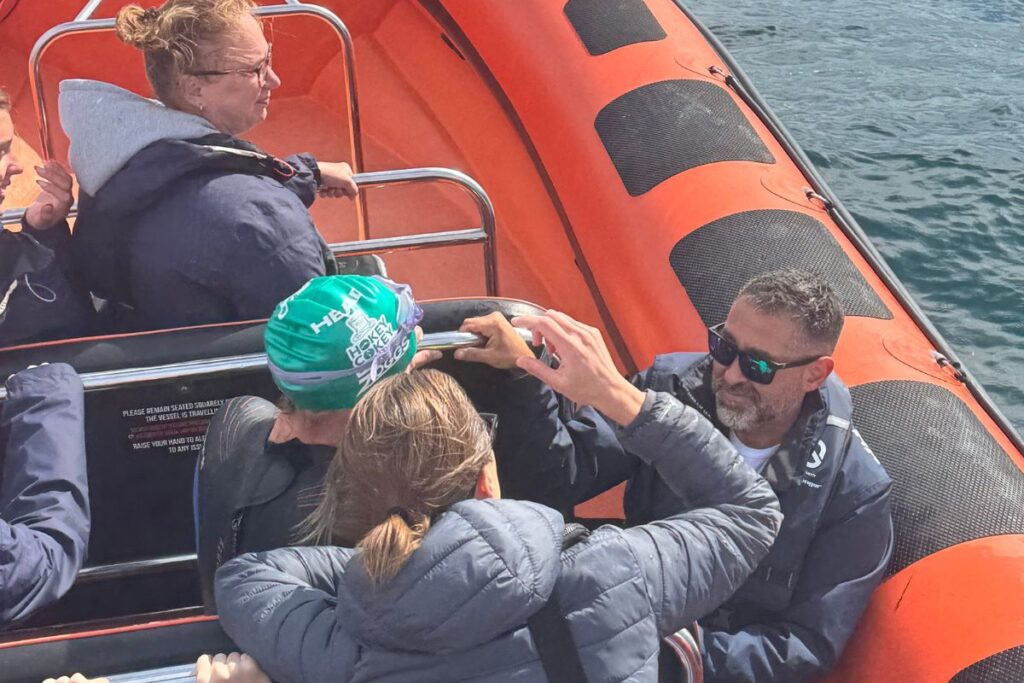
Sit in the middle of the boat. If you can, position yourself centrally, this is the most stable part of a RIB, where the movement is least pronounced. Let one of our crew know if you are feeling unwell and we will make sure you are in the best spot.
Do not lie down or close your eyes. It feels like the natural instinct, but it reliably makes seasickness worse. Keep your eyes open and on the horizon, breathe slowly, and take in the fresh air.
Tell our guides. This is the most important one. Our team are experienced sea-goers who sail in all weathers, and they have their own tried-and-tested approaches. If you are feeling off, say so straight away, we would far rather know early than have you quietly miserable at the back of the boat. We can adjust where you sit, change pace if conditions allow, and make sure you are as comfortable as possible.
Stay clear of the engine. Exhaust fumes at the stern of the boat can make nausea significantly worse. If you are feeling unwell, make sure you are as far forward as possible.
The mental side of seasickness
This is one area where the ancient scholars were actually onto something: our mental state has a real influence on how our bodies respond to motion on water.
There is some evidence that experienced sailors develop a tolerance to seasickness over time, but the more likely explanation is that they have less anxiety about being on the water. Anticipatory anxiety creates a feedback loop: worrying about being sick can make you more prone to it.
If you are nervous about seasickness, the best thing you can do is talk to us before your trip. Ask us anything, about the sea conditions that day, about where to sit, about what to do if you feel off. We have heard every question, and we genuinely enjoy answering them. Our frequently asked questions page covers a lot of common concerns, and our team are available by phone or email before your booking if you want to talk things through.
Find out more about what to expect on your trip.
Is seasickness more likely on a RIB?
This is a fair question. RIB boats (rigid inflatable boats, which is what we use for our Sealife Safari, Seal Safari, and Explorer’s Safari trips) do have a more dynamic ride than a larger vessel. They are fast, responsive, and you feel the water beneath you.
In our experience, the brevity of the trips makes a significant difference. Our safaris typically run for one to two hours, not a full day crossing. Many people who have felt unwell on longer ferry crossings find shorter, faster trips much easier to manage. There is less time for symptoms to build up.
Sea conditions also play a role. Flat, calm water makes for an effortless trip. You can check the Padstow webcam and sea conditions before your visit for a sense of what to expect, and our team will always contact you if conditions are unsuitable and we need to reschedule.
Seasickness remedies at a glance
| Remedy | When to use | How effective | Notes |
|---|---|---|---|
| OTC medication (Stugeron, Kwells) | 30–60 mins before boarding | High | Check with pharmacist; drowsy/non-drowsy options |
| Ginger (tea, biscuit, beer) | Before and during trip | Moderate | No side effects; good for children |
| Acupressure wristbands | Put on before boarding | Variable | Effective for some; worth trying |
| Fixing gaze on horizon | Once symptoms start | High | Most reliable on-water remedy |
| Fresh air on deck | During trip | High | Avoid going below if unwell |
| Eating a light meal | 1–2 hours before | Moderate | Never fast; avoid heavy or greasy food |
| Avoiding alcohol | Night before and morning of | High | Often overlooked |
Frequently asked questions
Should I tell Padstow Sealife Safaris I am prone to seasickness when I book? You do not need to, but you are welcome to. If you mention it when you arrive, our guides can make sure you have the best position on the boat and know to keep an eye on you. There is no judgement, it happens to experienced sailors too.
Can children take seasickness medication? Some over-the-counter medications are suitable for children over two years old, but dosages and recommendations vary. Speak to your pharmacist before the trip, and always check the specific product’s instructions. Ginger and acupressure wristbands are generally child-safe alternatives.
What if I start to feel unwell during the trip? Tell one of our guides straight away. We will help you find the best position, make sure you have fresh air, and if absolutely necessary, we can head back to the harbour early. We have never had a passenger suffer in silence and been glad of it.
Does eating before a boat trip help with seasickness? Yes. A light, settled meal about an hour or two before boarding is recommended. An empty stomach can make nausea worse. Avoid anything heavy, rich, or spicy.
Are some positions on the boat better than others for seasickness? Yes. The middle of the boat experiences less movement than the bow or the stern. Sitting facing forward and keeping your eyes on the horizon also helps. Our guides can advise you where to sit when you board.
How long does seasickness last? For most people, symptoms ease quickly once back on dry land. On the water, the horizon technique and fresh air usually bring relief within a few minutes. If you take preventative medication, you are less likely to reach the point of active symptoms.
What should I absolutely not do if I feel seasick? Do not go below deck, lie down, look at your phone, or close your eyes. Do not stay at the back of the boat near the engine. Do not suffer in silence, tell our crew.
Ready to book your trip?
The vast majority of our passengers have an incredible time on the water, and if seasickness is on your mind, we hope this helps put it in perspective. Our guides are there to look after you from the moment you board.
Book your trip | View all trips | Read our FAQs | Contact us